


A few weeks ago, my husband and I had big date night plans: a kid-free, nostalgia packed outdoor showing of the 2006 movie masterpiece, “She’s the Man.”
We had just finished loading the picnic blanket and cooler when we found out our babysitter couldn’t make it. Five years ago, this would’ve been the end of the story. We would’ve retreated inside, resigned ourselves to frozen pizza and a grumpy bedtime, and called it a day.
Instead, I called up a neighbor and she told me to send the kids over, no worries. In minutes, we were on the road, amazed at how easy it had been. Then my husband said something that stopped me in my tracks: “The crazy thing is, I think we had at least four other people we could’ve called if we’d needed to.”
I had to let that sink in for a minute. He was right. We did. Over the last almost decade we’ve lived in our neighborhood, we’ve slowly built the village we always dreamed about. It isn’t glamorous, and it’s not always easy, but it is as rich and full and lovely as I imagined it could be.
For years, I have hesitated to write about village building outside the context of food. In many ways, it feels like we lucked into our community. I wasn’t sure I had any wisdom or transferable skills to impart, and I didn’t want to be the insufferable braggart who can’t stop talking about how great it is to have nice neighbors.
The reality is we have gotten lucky in many ways, but we’ve also intentionally structured our lives to be open to and actively investing in relationships with our neighbors. And those decisions have mattered. They’ve moved the needle from having “nice” neighbors to having neighbors who show up in an emergency, neighbors who really love your kids and your dog, and neighbors who invite you over for a crab boil on a Friday night.
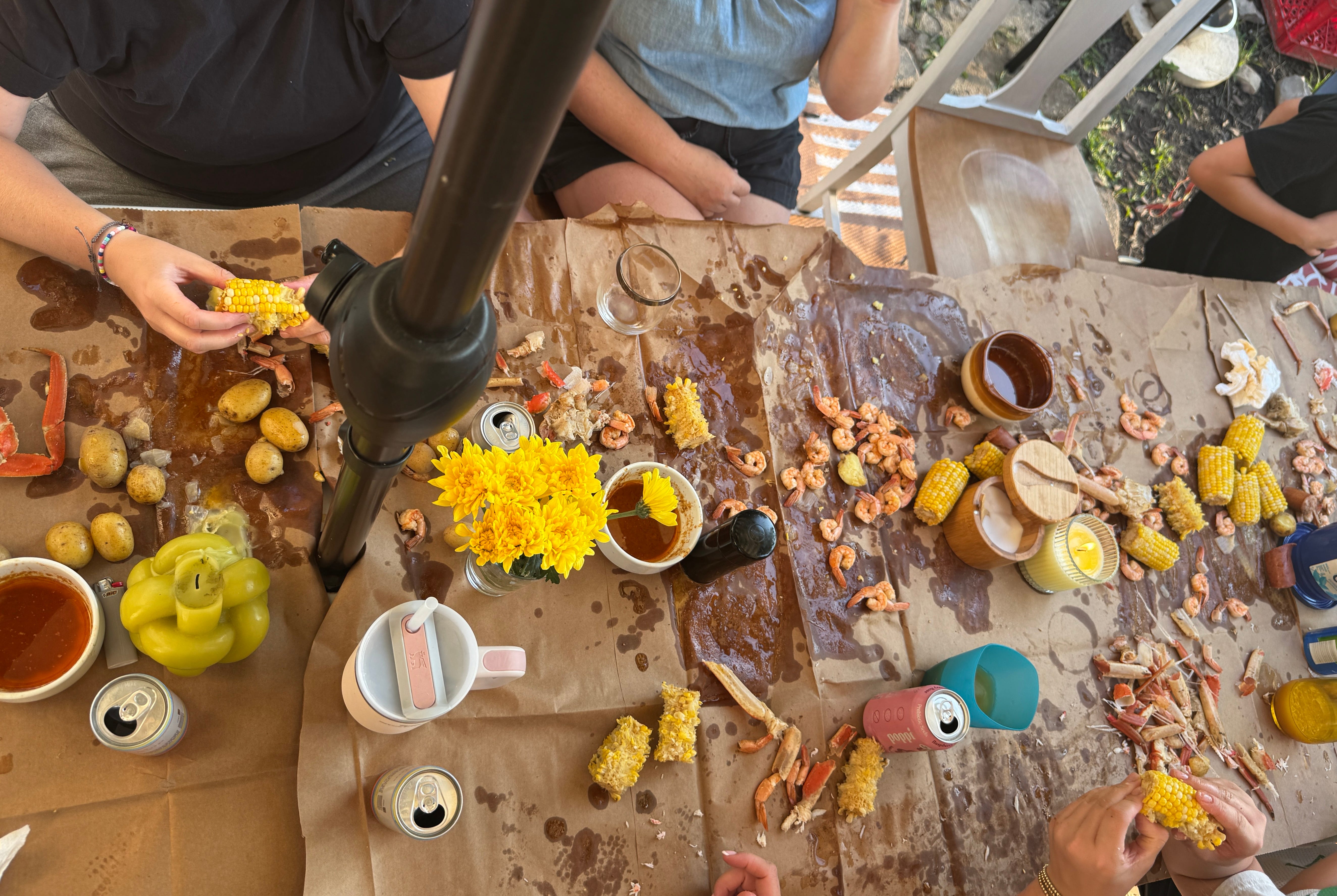
What follows is not prescriptive. Your village is going to be as unique as your neighborhood and family are. We live in Columbus, OH, in a neighborhood with modest homes built in the 1960s. Our immediate neighborhood block is made up of several families with school-age kids, an older retired couple, and a single mom with college-age kids.
I can’t tell you exactly how to build your perfect village, partly because a “perfect” village doesn’t exist, but also because how you are situated geographically and socially matters a lot. What I can give you are ways you can set up your life to make village building easier. These are the choices you actually have control over, things you can proactively do to clear roadblocks and create opportunities for connection. I’ll also share things that have helped us avoid the common pitfalls in close relationships, including boundary setting and conversations about shared values.
What I hope you’ll take from this is that you don’t need elaborate theme parties or a huge house or the boundless energy of an extrovert to make friends with your neighbors. Our village started with 10 minute conversations in the driveway that led to checking out someone’s garden that led to inviting the kids over to play that led to birthday parties and backyard hangs and a group chat and the village that showed up for us when we really wanted to go on a date. You don’t have to be fancy or show up as anyone but yourself, but you do have to show up.
An Accidentally On Purpose Guide to Turning Neighbors into Friends
This first one is for folks who are moving or deciding where to live, so you can skip this if you’re already settled! If you have the privilege of choosing where to live, think about the neighborhood or apartment building as much as you think about the house itself. You can prioritize a certain number of bedrooms or a gleaming kitchen, but you can also look for signs that a solid community already exists. Does the neighborhood have sidewalks? A park in walking distance? Are there little free libraries or pantries in the area? Is the local elementary school playground full, even on off hours? Are people outside walking their dogs or pushing strollers or sitting on porches? Are there signs posted for events in the hallways? Consider what you might be willing to sacrifice in a house or apartment for the sake of a community. I grew up in the country and will always long for wide open spaces, but at the end of the day, I chose living in closer proximity to people (and potential friends!) over a giant yard.
Open the gates, literally or figuratively. Our backyard juts up to another backyard with a fence in between. When we moved in, there was a rusty gate between our homes that didn’t really work. Our kids would see the neighbor kids over the fence and yell/talk to each other, but they couldn’t really play. Then one day we finagled the gate open, and our kids have been running back and forth between our homes ever since. We have a swing set; they have a trampoline. Our kids use both freely. And with the gate open and the kids playing, the grown ups had so many more excuses to connect as well. We started having conversations at the fence, then in each other’s backyards, then in our homes. It didn’t happen overnight, but so much of the relationship we have now was simply because we were willing to open the gates. For you, that might mean inviting your neighbors to share coffee on the front porch, like this, or to an apartment group chat, like this. Or, it might simply mean making yourself available to meet-cutes with your neighbors, which brings me to my next suggestion.
Be outside. Garden. Walk the dog. Walk the kids. Walk yourself. Read outside on a blanket. Eat dinner in the front yard. Drink a cocktail or a coffee on the front porch. Wave at people as they go by. My friend Erin is an extrovert and excellent at striking up conversations with strangers. That is not my strong suit, but I’ve learned from watching her. When she’s in her front yard, she manages to find any entry into conversation. She compliments people’s hair, their pets, their outfit. She asks their names, how long they’ve lived there, where the kids go to school. She finds a way to connect simply by being outside, observant, and curious.
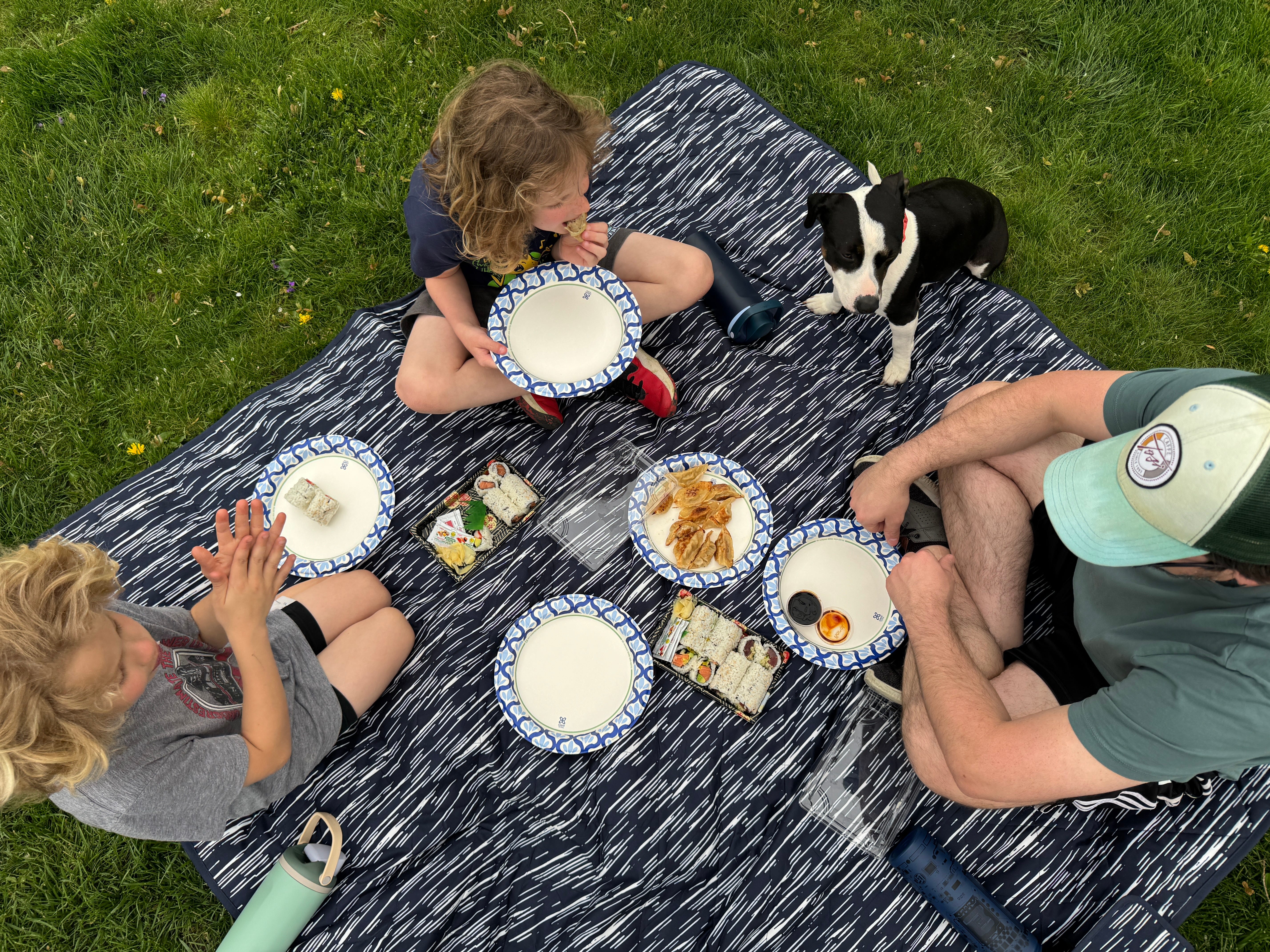
Allow yourself to be seen when you’re not at your best. I think neighbors offer the easiest path to friendship partly because they’re the people who see you when you aren’t prepared to be seen. They see you when you’re still in your pjs chasing a runaway dog down the street. They see you when your teeth aren’t brushed and you’re still bleary eyed, watching the kids chase each other with sticks in the back yard. Nothing builds intimacy like this kind of every day proximity. Yes, it feels vulnerable, but it is also freeing to show up without any pretense or preparation.
Leave room in your life for spontaneous conversations and gatherings. I think Lisa from the Auntie Bulletin said it best: the white space in your calendar is a service to your community. We are a busy family, but we also intentionally don’t fill up every day on the calendar. We don’t do travel sports or volunteer for everything at church. This has allowed us to give easy YESes to last minute BBQs, pack walks around the neighborhood, and having other poeple’s children in our house on a regular basis.
Food is the best wing man. If you’re feeling a little shy or intimidated, let food grease the wheels for you. Make this sour cream banana bread or triple chip cookies and use them as an excuse to introduce yourself.
Share what you have, and ask for what you don’t. Instead of going out and buying something you don’t have, consider asking a neighbor if you can borrow it first. Need a second loaf pan for a big baking day? Ask a neighbor. Need a special tool or a contractor recommendation or a literal cup of sugar? Ask! And be willing to share your own stuff and expertise, too. Not everyone needs to own a 15 ft ladder, but it sure comes in handy when one person in the neighborhood owns one. Pool your stuff!
Those first few are more about initial encounters and getting to a first name basis with your neighbors. These next tips are for establishing a deeper connection, and can be especially helpful if you have kids.
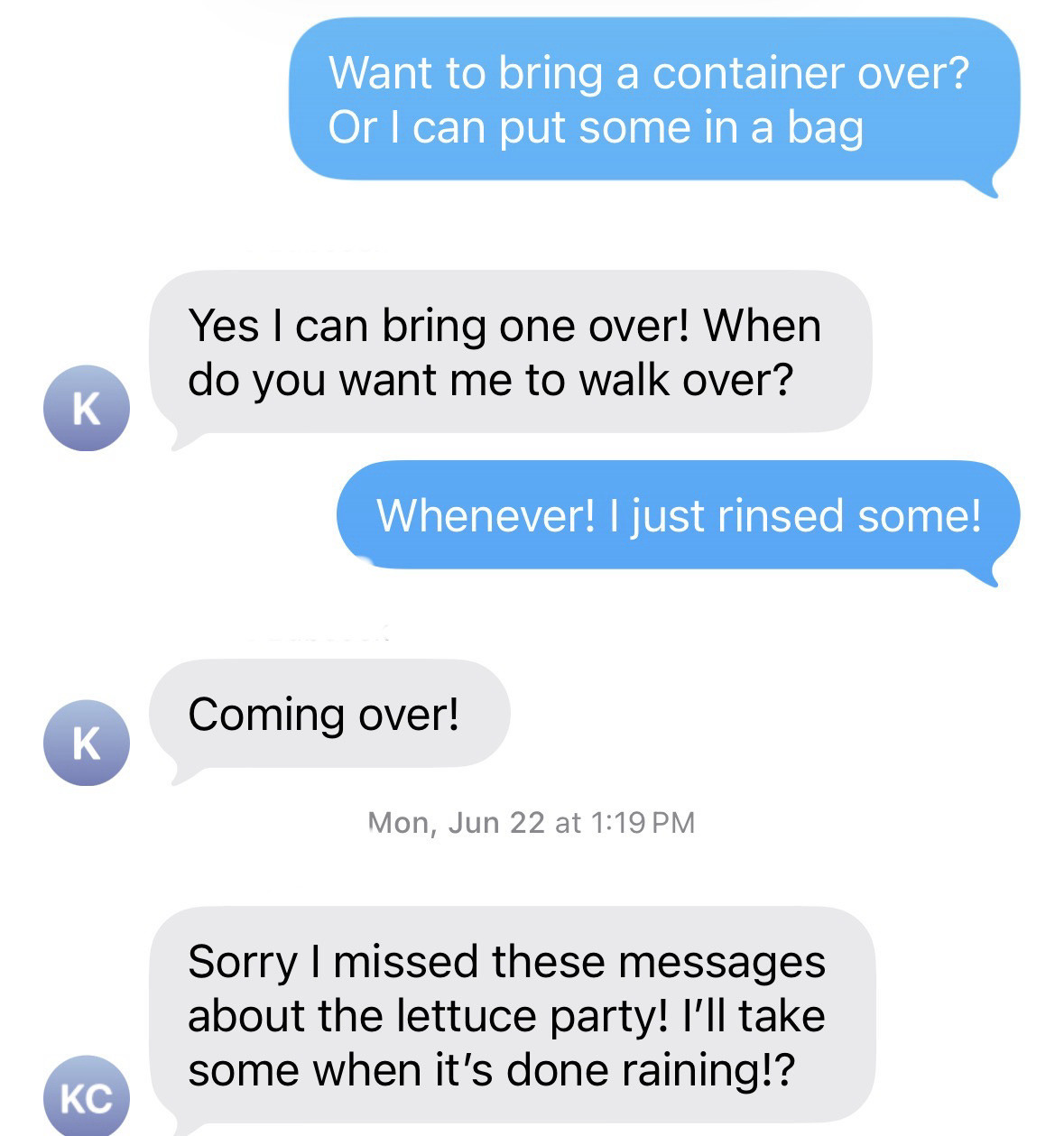
Start a group chat. This feels like the easiest way to go beyond the front yard hello. In a group chat, you can check in on each other during storms or power outages, ask for help with house maintenance or emergencies, or keep tabs on which house the kids are currently playing at.
Be willing to have your peace disturbed. Listen, if you want to be able to control everything about your day and your time, the village life might not be for you. Sometimes I have five pre-teen boys in my house and it is loud and chaotic and I’m tripping over nerf darts and light sabers. Do I sometimes have to tell everyone that they’re bringing outdoor energy to an indoor party and kick them outside? Yes. Do I get interrupted a lot? Yes. Is this 100% worth it? Also yes.
Have a conversation about shared values and boundaries. Our neighbor crew knew our kids would be spending a lot of time in each other’s homes during the summer, so before the break, we sat down and discussed everything from what each kid likes to eat for lunch to what to do if a kid is crashing out. We talked about things like etiquette (example: no knocks before 10 AM), and house rules (snack wrappers left out of the trash will drive me up the wall and put an end to fun summer Courtney). This is also a great time to talk about media and what’s comfortable for each parent and their kids.
Be willing to release the micromanagement of your children. You should absolutely do your due diligence and have conversations about core safety concerns (guns in the home, Internet access, food allergies, etc), BUT if you want a village, you’ll have to let go of some of the small stuff. Sometimes my kids doubled up on sweet treats or screen time, because they were at someone else’s house. Sometimes they didn’t keep the same rest or chore time routine they do at our house. Sometimes I’m sure conversations were handled a bit differently than I would have handled them. To me, this trade off was more than worth it. The memories and friendships they have made (and that we’ve enjoyed as well!), are worth them having two ice cream sandwiches in a day.
Ask for help and show up when other people need it. I think many of us are actually better at giving help than we are about asking for help. But WOW, it has been such a gift to learn to reach out for help rather than just trying to do it all on our own. If you need ideas for how to show up for the people in your life, I’ve got ten things you can text besides “Let me know how I can help!”
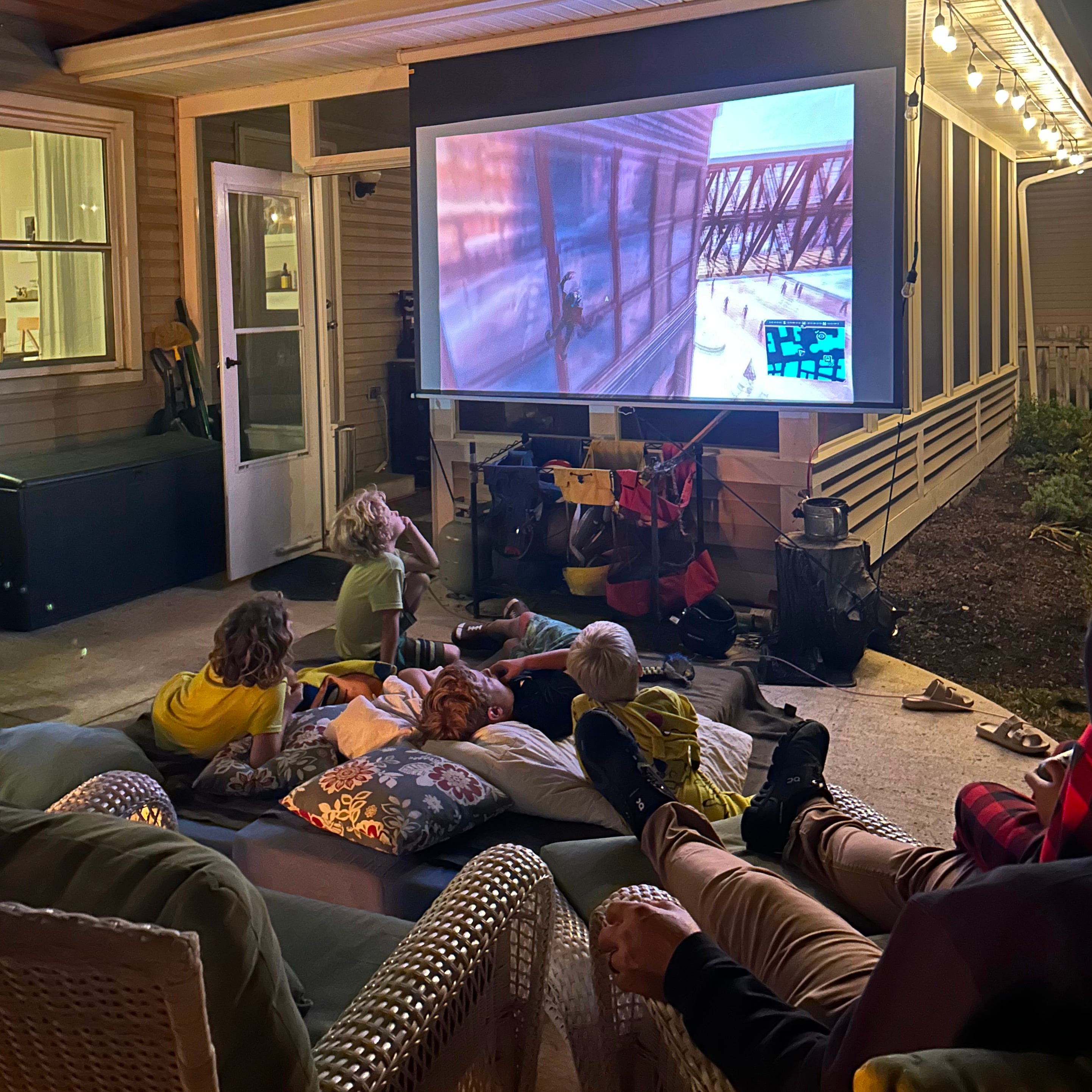
Building relationships with our neighbors has made everything from traveling to managing summer break feel less stressful and more joyful. Not to mention, I now get to count these people as some of my dearest friends. I’m so glad we opened the gates and kept them open!
I would love to hear from you! What’s your biggest obstacle to knowing your neighbors. What are the pain points? What’s something that’s worked well for you! Let’s practice neighboring in the comments. ❤️
If you’re interested in how to love your neighbors even (and especially) when the world is breaking your heart, join the NeighborFood community! You’ll hear practical advice and real talk from a former community organizer turned food blogger on friendship and motherhood, faith and grief, and the ministry of casseroles.
love this! our neighborhood is lovely, but there are sadly very few kids. Prop 13 in California, which caps your property tax based on the year you bought your house, makes it so older folks are financially penalized a lot for downsizing. So they stay in their big houses! And family-friendly housing stock is taken up by folks who don't need it until they pass away.
This is a fantastic post Courtney! I am gonna make the effort to get outside more often (but not during the summer heat in Texas)!
There are 3 of us ladies on my street who enjoy doing jigsaw puzzles. I serve simple non-messy snacks like pretzels or nuts and we talk while bringing order out of chaos (the puzzle pieces)on the dining room table.