


I’m so thrilled to share this conversation with Elizabeth Berget, author of a new book, Love Like a Mother. Elizabeth is a Minnesotan and mother of 3 who writes from the very center of boring, overwhelming, sacred, and extraordinary motherhood. Her book elevates the dignity of motherhood while also revealing the tender, generous, and ferocious love of a mothering God.
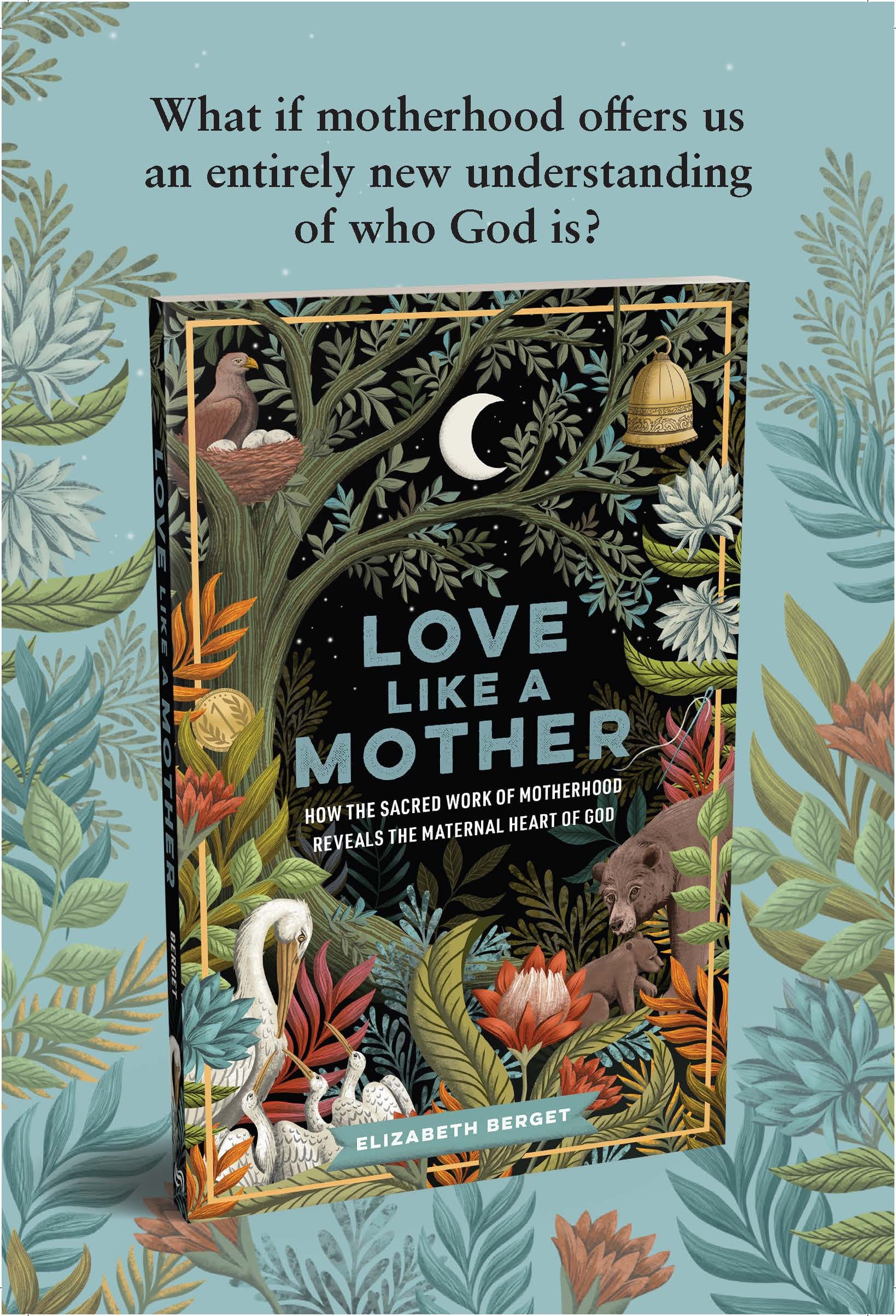
This book feels like a balm for anyone who’s felt unseen in their mothering or wondered if God really loves them, or perhaps even more curiously, if God really likes and cares about them. I was, of course, especially intrigued by all the ways Elizabeth discusses God’s care expressed through feeding his beloveds. We talk about the ministry of snacks, go-to meals for new moms, and encouragement for mothers of pre-teens and teens. (God help us all!) I hope you enjoy this conversation as much as I did! For more of Elizabeth’s work, visit her Substack, Back of the Flock.
One of my favorite parts of your book is when you share the story of Elijah from 1 Kings 19. This man is alone in the wilderness, fearing for his life, exhausted, and in deep despair. And how does the Lord answer him? With a shade tree, a nap, and some snacks. I’m fascinated by the ways food restores us not just physically, but also emotionally and spiritually. Do you have a specific memory of a meal that did this for you?
I also love that story of how God cares for Elijah in such physical, tangible ways. What’s really interesting, if you pull on the thread of that story a bit more, it’s only after Elijah is taken care of in such embodied ways that he is able to cultivate the spiritual awareness to recognize God in the gentle stillness after witnessing hurricane winds, a trembling earthquake, and raging fire outside the mouth of the cave he was hiding out in.
My own restorative meal came from the hands of my mother. I lived and taught in *very* rural South Sudan for a year in my early twenties — think no electricity or running water or email or phone. I ate rice and beans twice a day, everyday. It was good and filling and wildly monotonous, but when I returned home from the equator to the dead of a Midwest winter, my mom made one of my favorite childhood meals — stuffed cabbage + the creamiest mashed potatoes. I just remember feeling the warmth of home and welcome coming back into my bones with that meal.
I’ve found most Midwesterners take pride in caring for people through food. What’s your go-to dish that you love to bring to new moms?
Pinch of Yum’s crockpot carnitas! I know Lindsay of Pinch of Yum well (she’s the Lindsay from the book!) and had the pleasure of being in a dinner club with her for years; her recipes don’t miss! I love to cook up a huge batch of the carnitas meat, save some for my family to have for dinner, and then package it up with all the typical toppings, plus tortillas, rice, chips, and usually a huge bowl of fruit. (Someone brought me a giant fruit salad after I had one of my kids, and I ate it in one glorious sitting). I like to bring the carnitas because it accounts for picky eaters to make their own taco or bowl situation, reheats well, and freezes like a dream if there’s too much. I also always include dessert and pick up a few easy breakfast items like muffins or banana bread because postpartum mornings are hard and...hungry.
You talk a lot in the book about the very physically demanding years of early motherhood, but you’re also entering into a new season of caregiving for tweens and teens. I loved your story about your oldest son Owen and the first time you allowed him to bike to a friend’s house by himself. I thought about how God’s love is brave enough to give us freedom to change, make mistakes, and learn. What new ways have you seen God reflected in mothering this age group and what encouragement would you give to those of us (ahem, me!) who are entering this new season?
I’m walking into this uncertainty right beside you! It is so strange to have kids that are, in so many ways, so independent and at the same time, so needy. Often I feel like the physicality of motherhood has turned into something more like an emotional/relational doula + chauffeur.
I think I most identify with the heart of God in my kids’ unfurling…in having a front-row seat to their becoming. While I could do without the burgeoning B.O., I am generally delighted at the way my kids are emerging into themselves. I see these hints of adulthood and maturity in them as I witness what makes them laugh, what makes them cry, what makes them afraid. I see their relationships with each other becoming something other than arguing over toys and whose turn it is. They have inside jokes and, I’m pretty sure, a handful of secrets that I am not privy to. And it’s truly and utterly delightful for me to watch them grow.
I think these middle-kid years have softened my heart to understand that God delights in me. God likes me. God knows that, in the relative terms of eternity, I am in many ways still a newborn on uncertain giraffe legs making my way through this world. Just as I watch my kids navigate each new thing, sometimes flailing and sometimes thriving, so God watches me navigate each new season of my life, inviting me to turn to him with my needs, delighting in my every wobbly step. I think of our lives on earth as a metamorphosis that God is eagerly watching and waiting on, clapping with delight at each new stage. Having older kids has helped me realize that God really, really loves us, at every stage.
Your community was deeply involved in caring for your neighbors in Minnesota during Operation Metro Surge. What kind of mothering, nitty-gritty care work did you see play out there? How has that time shaped your idea of what loving your neighbor means?
This winter in Minneapolis during Operation Metro Surge was one of the most transformative experiences of my life. I witnessed so much pain and heartbreak and injustice alongside so much care and connectivity and beauty. I’m still trying to put words to it all. The community mutual aid work that happened here as we sought to protect our most vulnerable neighbors was, largely, the work of mothering. We took care of the basics — we made sure hungry people had food shopped for and delivered to them so they could stay home. We raised funds to cover rent needs as people lost income and found new shelter for people whose apartments or homes had been raided. We ran a whole underground laundry ring so people could have clean clothes without going to the laundromat. We bolstered food and hygiene banks with donations and volunteer power, legal observers roaming the block, whistles at the ready. We got kids safely to and from school. We tracked down in-home medical care for the sick.
It felt like an embodied practice of Jesus’ words in Matthew 25 about caring for “the least of these.” What was stunning to witness was how each person gave of what they had — time, resources, skill sets. Our signal chats pinged all day with needs for rides, doctors, groceries, legal assistance, and one by one, each need was met. It wasn’t up to one person, and there wasn’t even one central leader. I learned that the social safety net was real. I think what I most learned about loving my neighbor was that it works best on a collective level, when we all belong to each other.
I share a lot on NeighborFood about the value of gathering, eating together, and feeding people, but I realized after reading your book that I often overlook the fact that mothers do this every single day, usually multiple times a day, with their kids. Even as a food writer and community organizer, I’ve often glossed over this work like it doesn’t “count” towards community building, but of course it does. This is why Love Like a Mother feels so necessary. It takes all the work of mothering we might call mundane or boring and instead calls it sacred, dignified, even transformative. What are the connections you see between feeding kids and feeding our neighbors? How does motherly care build our capacity for community?
I’m someone who generally moves through the world expecting to find God hiding in plain sight. I am forever taking pictures of clouds and turning over parables in my garden soil. But I wasn’t really expecting to find evidence of Divine care at the bottom of my laundry basket in the earliest years of motherhood. This everyday work of mothering opened my eyes to the unrelenting, specific, intimate care that God has for each one of us.
Because the work of motherhood is cyclical, not linear. We all know the laundry is never really done. Kids get hungry, we make food, we wipe them and their surroundings down, do some dishes, and then start the whole thing all over again a few hours later. Their needs don’t stop, and the work continues. In this, I think the work of mothering provides a picture of community care. We know that human relationships are complex and take intention, effort, and ongoing time; we know that within any group of people, there will always be need. The cyclical work of motherhood reminds us that for communities to thrive, we need to be invested for the long haul.
But the flip side of that is that intimacy is built over met need. Motherhood is rewarding ultimately because it is so connective, and we have the capacity for that in community too if we lean into the never-ending nature of it versus resist it.
To close out, I’d love to hear how you mother yourself or direct the mothering heart of God to your own soul? Are there certain people or practices that have fed your spirit during your most grueling days of mothering?
I love this question.
As for people, I have a handful of older women, my mom and mother-in-law included, who have passed along their wisdom and peace and well-worn perspective when I’ve needed it most. These are also women who have consistently prayed for me and let me know when they do, and anytime I get together with any of them feels like time spent together in God’s presence. My advice to anyone is to find older people that you admire and barnacle yourself into their life until they start sharing their wisdom with you! I also have a group of local friends who feel like family, and these are the people we call in the middle of the night when there’s an emergency, who have brought me meals and watched my kids and brought over flowers picked from their backyard on a hard day. I am so grateful for all of the people who mother me.
I have many spiritual practices that serve as a conduit to God’s maternal love for me. I include many of them in the book, at the end of each chapter - small ways to recognize God’s love in the midst of a busy day, contemplative reflections that don’t add more to an already full schedule. One of my go-to’s is to look at any small act of care that I’m doing - maybe I’m doing dishes for the umpteenth time - and as I rinse each one, I think about how God is in the business of making all things new, restoring me. Or if one of my kids has some big feels and comes to me with tears in their eyes, I think about how God longs for me to look to him when tears fill my own eyes, how God longs to hold me and tell me the truth about myself until I believe it. I think our days are full to the brim of reminders of how God cares for us. This awareness fills my soul when the day or season is too busy for other spiritual practices like meditation or prayer or reading my Bible. God is eager to meet us where we’re at - in every day, in every season.
Thank you, again, Elizabeth, for being so generous with your time and wisdom! We’d love to hear from you, too. How does the idea of God loving like a mother feel to you? I hope if it’s a new idea for you, it's one that feels healing and hopeful!
This was such an uplifting and refreshing interview, especially for someone like me who has two (!) middle schoolers, three in elementary, and a toddler who is not yet potty trained. The mindset shift required into acceptance of the friction we'll encounter as moms - as members of our little family unit community, but also our broader community as well - can really change how we feel in this time in our lives, both private and public.
Thank you Courtney for bringing Elizabeth's writing to my attention!
Thank you so much for these thoughtful questions and for Love like a Mother with your community! ❤️